At a glance
Water damaged drywall repair evaluates the wall assembly, resolves outstanding moisture issues and replaces or refinishes material as appropriate. A paint patch is not enough when board or concealed layers are unsuitable for retention. Confirm source repair, drying assessment, opening boundaries, finish matching and adjacent-work exclusions.
Identify the wall assembly, not just the stain
Tell the contractor where the damage appears and what occurred before it was noticed. A mark below a plumbing fixture, swelling at a wall base and damage beside an exterior opening suggest different investigation questions. Describe any source repair already completed and share its records. The stain's shape alone cannot establish the full condition of the wall or the route water followed.
Ask what layers may need assessment, including the board, insulation, trim, adjoining floor edge and cavity. The repair contractor should distinguish confirmed deterioration from areas that remain inaccessible. A recommendation to open the wall should identify its purpose and likely repair boundary. Likewise, a proposal to retain the board should explain why the assessed material is considered suitable rather than rely only on a dry-looking paint surface.
Water around outlets, unstable material and possible contamination require appropriate professional assessment before access or disturbance. Do not remove fixtures or cut exploratory holes yourself while arranging a repair. Tell the contractor about such concerns, including the building's age and any unusual finishes, so unresolved material or electrical questions can be directed to the appropriate specialist before routine drywall work begins.
Separate source control from board replacement
A drywall repair contract may not include plumbing, exterior weatherproofing or appliance repairs. Ask who will resolve the water source and how the repair team will know that task has been completed. If source correction remains uncertain, discuss the consequences for closing the wall. A new section of board will not make an active leak disappear.
Coordinate assessment and drying with replacement. Ask what condition the underlying materials must reach before rebuilding and what evidence will be retained. Avoid agreeing to a fixed closing date before the assembly has been assessed. The relevant contractor should explain how it determines readiness rather than use elapsed time alone or the absence of visible water as the complete answer.
When multiple trades are involved, identify the handover points. A plumber may leave an access opening; a restoration team may remove wet materials; a drywall contractor may rebuild; a decorator may finish. Confirm which party protects the opening, disposes of debris and reinstates surrounding trim or fixtures. Naming these tasks reduces the risk of every contractor believing another company is responsible for the final condition of the room.
How the repair boundary follows the actual wall condition
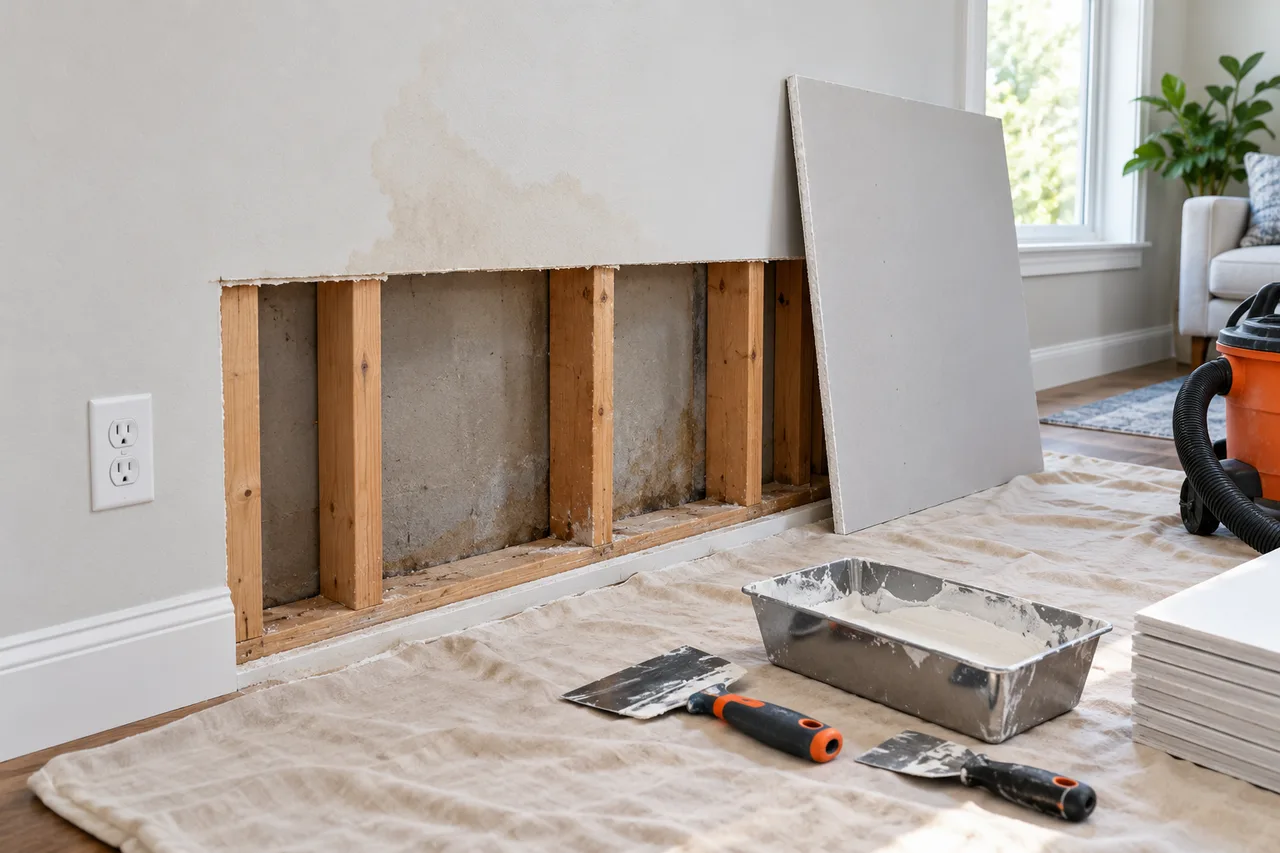
Drywall repair starts with the assembly and exposure, not a preset cut line. A stained but sound face, swollen edges, separated seams and softened board describe different conditions. The cavity may also contain affected insulation or framing. For a clean-water incident, EPA guidance allows some intact wallboard to dry in place; that is not a rule for sewage exposure, deteriorated board or a concealed layer that cannot be adequately assessed.
An opening should make the necessary investigation or replacement possible while identifying the impact on adjoining finishes. The visible water mark may be smaller than the affected layer behind it. On the other hand, a mark does not automatically justify removing every wall in a room. The contractor's material record should explain why the chosen boundary is appropriate, what is being retained and where the inspection remains incomplete. Unknown older finishes or hazardous materials can require a separate assessment before cutting.
Replacement board needs proper support and compatibility with the existing wall's function. A partition with a required fire-resistance or acoustic assembly should not be reconstructed as an ordinary decorative patch without checking those requirements. Insulation, trim, outlets and cabinetry may need separate trade responsibilities. Closing the cavity belongs after the source and retained-material conditions have been reviewed, rather than when the board delivery happens to arrive.
Why joint finishing and paint matching affect the finished result
Replacing board creates a substrate; joint treatment and decoration create the visible finish. These are related but distinct tasks. Compound, tape, texture and coating must suit the repair and the surrounding wall. New work can absorb or reflect light differently from aged surfaces, so a small paint patch may remain noticeable even when the physical wall repair is sound. A wider finishing boundary may be needed to achieve the agreed appearance.
Corners, baseboards, cabinetry and fixtures change how the patch connects to the existing room. A repair behind a fitted unit may require removal and reinstatement of that unit, while a broad open wall may need fewer access tasks. These details should be part of the proposed deliverable rather than discovered after demolition. Color selection alone does not settle texture or sheen, and using an old paint name does not guarantee a match to an aged wall.
The work sequence also affects room use. Investigation, necessary drying, board installation, joint finishing and decoration may involve separate visits and material-dependent intervals. It is more useful to identify which stage is complete than to promise an unconditional finish date before the wall is opened. The handover should distinguish cosmetic matching from unresolved source repair. A newly painted wall should not conceal continued dampness, and a recurring mark needs investigation rather than another coat.
Compare repair costs by complete deliverable
Request a breakdown covering assessment, removal, disposal, replacement board, finishing, protection and cleanup. Ask whether insulation, trim, fixture reinstatement and painting are included. If drying or source repair is needed, identify its separate price and provider. Comparing only the drywall patch charge can underestimate the actual work required to return the room to the agreed condition.
Access, wall height, built-in obstructions and repair shape can affect labor. Explain those conditions before relying on a telephone price. Ask whether return visits are included, how concealed findings change the price and what payment milestones apply. Do not assume the contractor can give an accurate final scope solely from a cropped picture of discoloration.
Verify the hired contractor's required license and insurance, and clarify responsibility where another company handles part of the job. If you contact an insurer, ask it directly about reporting and documentation; this guide cannot promise coverage. Keep approval records for materials and scope changes so the final invoice can be compared with the agreed deliverables. Also request any actual workmanship warranty terms rather than assuming all future water damage or cosmetic differences are covered.
Review the finished repair and preserve records
At handover, compare the replacement boundary, finish and reinstated components with the written scope. Identify incomplete trim, fixtures, paint or cleanup separately from work that was excluded. Ask who will resolve each outstanding item. Do not accept a board installation invoice as proof that every agreed decorative task is complete if the contract included more than board replacement.
Request the relevant material-assessment or drying records and information about the water-source correction. Keep photographs taken safely, change approvals and product or paint details together. These records can help a later contractor understand what was repaired and why. They are particularly useful if another wall area becomes affected or if an adjoining repair is planned.
If swelling, staining or the original moisture concern returns, arrange reassessment of the source and assembly rather than applying another cosmetic patch. Record when and where the change appeared and share the earlier paperwork. Drywall repair focuses on affected wall materials; ceiling damage needs an overhead repair assessment, and damage across several rooms may call for a coordinated water damage restoration scope. Choosing that boundary early can prevent duplicated contracts and gaps between trades.
Drywall decisions are not determined by stain size alone
| Situation or stage | What it addresses | Important limit |
|---|---|---|
| Sound board after a clean-water event | Assess exposure, seams, cavity access and drying suitability. | A dry face does not verify the concealed layers. |
| Soft board or failed seams | Evaluate removal and a supported replacement boundary. | Paint and filler cannot restore weakened board. |
| Special wall assembly | Preserve the appropriate functional construction in the repair. | Ordinary patch materials may not reproduce the existing assembly. |
| Mismatch after a small patch | Review texture, sheen and the agreed finishing area. | Material repair and an invisible paint match are different deliverables. |
Typical work sequence
- Identify the source, exposure and full wall assembly.
- Agree on assessment access and a justified removal or retention boundary.
- Review retained conditions before fitting supported, compatible replacement materials.
- Complete joints, trim and decoration to the written finish boundary and record unresolved work.
The actual sequence depends on the assessed property and the hired contractor's written scope. These are planning stages, not an appointment or completion-time promise.
When to Discuss Water Damaged Drywall Repair
Drywall can wick moisture behind baseboards and paint. Repair may involve drying, controlled removal, replacement, finishing and checking adjacent areas for hidden moisture.
Signs Your Property May Need Attention
- Bubbling paint or swollen seams
- Soft drywall near the floor or ceiling
- Staining after a pipe, roof or appliance leak
What the Service May Include
- Check moisture around the visible damage
- Remove unsalvageable drywall when needed
- Replace, finish and prepare repaired areas for painting
Benefits of Water Damaged Drywall Repair
- A material assessment helps the homeowner understand why a section is proposed for retention or replacement.
- A defined repair boundary makes drywall, insulation and finishing responsibilities easier to agree on.
- Documenting the required texture and paint finish can reduce uncertainty about the completed appearance.
Limitations and Risks
- Replacement drywall does not correct an active leak. The source and surrounding materials still need attention.
- Drywall removal may reveal additional damage and increase the approved scope.
- Repairs can involve dust, room protection and separate visits for finishing. Paint matching may require work beyond the replaced section.
Questions Before Hiring a Contractor
- How far did moisture travel?
- Is insulation or framing affected?
- Who handles paint and final finish work?
Costs and Work Terms
Pricing depends on the assessed property, affected materials, urgency, access and the contractor's written scope. Confirm any assessment charge, exclusions, payment terms, license and insurance before approving work.
Frequently Asked Questions
Can wet drywall be dried instead of replaced?
Sometimes. EPA clean-water guidance allows drying wallboard in place when it is not visibly swollen and the seams remain intact. Damaged or contaminated materials need a separate assessment; do not assume every wet section can be saved.
Does drywall repair include insulation and painting?
That depends on the agreement. Ask whether insulation, trim, joint finishing, texture, primer and paint are included, and whether surrounding surfaces need a wider finish area.
What changes the cost of water-damaged drywall repair?
The affected area, height, wall access, material removal, concealed conditions and final finish influence the price. Confirm protection of the room, debris disposal and final cleanup.
Homeowner Resources
General AI-assisted homeowner guidance published by ClearHaven Restoration, a contractor-connection website, not a restoration contractor. References support the safety, sampling and equipment explanations; they do not certify this website or a contractor. This guide is not a property assessment. How this information is prepared.