At a glance
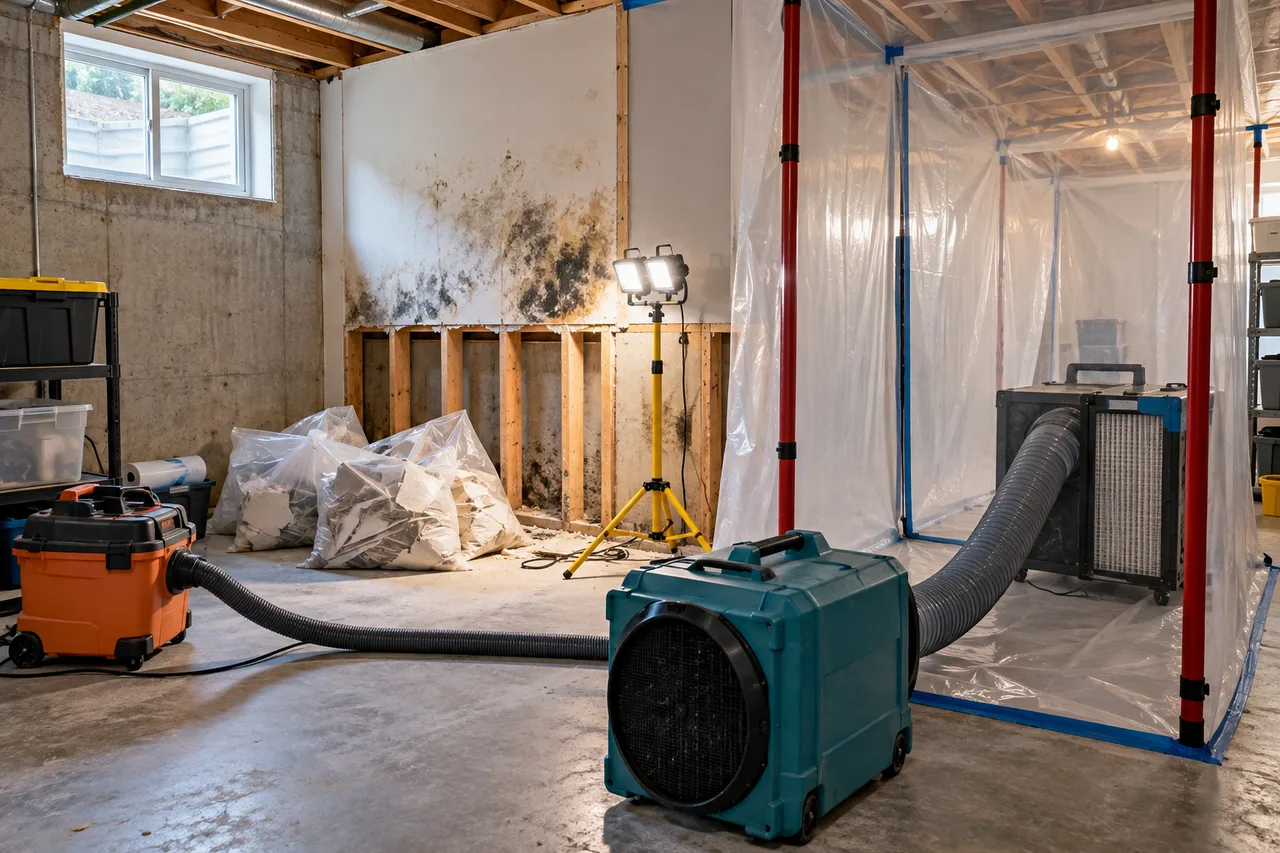
Basement mold removal addresses identified growth on basement materials while separating cleanup from the moisture-source repairs that may prevent recurrence. Foundation seepage, plumbing problems and condensation require different investigations. The removal plan should explain affected assemblies, stored contents, access, verification and rebuilding exclusions.
Distinguish the basement problem from a generic cleanup
Describe whether the basement is finished, partially finished or used mainly for storage. Tell the contractor where growth is visible and whether it appeared after outside water, a pipe leak or a recurring damp condition. A finished wall, exposed masonry surface and stored cardboard are different assessment targets. A room-wide treatment label is not a substitute for identifying the materials that actually need attention.
Record what you have observed about timing, including whether the concern changes after rain or during particular seasons. These details can help organize an investigation without proving the source. Do not assume that every damp basement needs the same drainage system or that every visible patch is limited to its surface. Ask the contractor which findings are established and which require additional investigation.
Keep removal work distinct from a structural or waterproofing assessment. A mold cleanup company may not repair a foundation, evaluate a retaining wall or design drainage changes. If those questions arise, ask who should assess them and how the findings affect cleanup timing. The objective is a material-specific plan with assigned source-correction responsibilities, not a promise that removing visible growth permanently solves every basement moisture issue.
Why basement wall assemblies change the removal boundary
A finished basement can have masonry behind framing, insulation, paneling or drywall. These layers are not interchangeable. A visible patch on a finish does not reveal the condition of the cavity behind it, and an apparently sound masonry face does not establish that adjoining porous components can remain. The assessment needs to separate accessible surface cleaning from decisions about concealed finishes and stored contents.
Built-in shelving, flooring edges and finished utility enclosures can restrict access. Opening an assembly may expose wiring, pipework or other components that need an appropriate specialist. A standardized cut height chosen without considering the actual condition is not a substitute for an assessed work boundary. Similarly, removing the visible growth alone may leave an affected layer inaccessible. Record the material and reason for each proposed opening so later rebuilding does not lose the original findings.
The rebuilding plan should not be settled solely by the desired room appearance. Retained layers need their own moisture and condition review, and the cause of dampness must have an assigned correction. Drainage or foundation investigation is a different task from cleaning a wall. Reinstalling the same finish over an unresolved damp area may recreate the maintenance problem. The appropriate new assembly and any permit requirements belong with the responsible building professional, not a generic mold-removal promise.
Organize stored contents and working access
Basement storage can make it difficult to see surfaces and move equipment. Discuss which items must be relocated, who moves them and where they will go. Do not carry suspect belongings through unaffected rooms without an agreed handling plan. Ask the contractor to distinguish items awaiting assessment from items already approved for cleaning or disposal.
Create an inventory from safe observations or existing records. Note furniture, fabric items, paper storage and built-in fixtures as separate categories because their handling may differ. Request documentation for discarded belongings and clarify whether specialist cleaning is offered under another agreement. A building-material cleanup does not automatically include restoration of every item stored in the basement.
Explain the stairs, doorway dimensions, exterior access and utility equipment present. Ask how workers will protect travel routes and maintain access to any areas that remain usable. In a shared property, identify whether utility rooms or common systems need separate permission. Agree how access restrictions will be communicated and who can answer questions during the job. These practical details should appear in planning rather than emerge after removal has already begun.
Separate seepage, plumbing leakage and condensation questions
The source changes the follow-up. Moisture entering from outside a wall, a leaking pipe and condensation on a cool surface can leave similar-looking marks, but they require different corrective work. Note whether the problem follows rainfall, plumbing use or a longer period of room closure. Those observations help organize an investigation; they do not establish the cause without assessment. A cleanup contractor should not silently include waterproofing, plumbing repair or ventilation redesign under one treatment label.
Surface mold removal addresses affected material. Dehumidification addresses moisture in room air. Neither function by itself repairs a water-entry path. A basement with continued seepage can remain a recurrence problem even after a clean-looking wall is restored. Conversely, a humidity concern without a demonstrated foundation defect should not automatically be described as a need for major foundation work. The decision should follow findings rather than the presence of the word basement.
The practical sequence is source investigation, appropriate material work, review of retained conditions and then rebuilding or storage reinstatement. Where several trades are involved, the completion record should distinguish what has been corrected from what is still only recommended. Contents kept against walls can make later inspection harder; a storage arrangement that allows observation is useful, but it does not replace moisture correction. If dampness returns, compare it with the earlier source findings before repeating the same surface treatment.
Compare removal costs and repair exclusions
Ask for the assessed affected area, materials to be removed or cleaned, contents handling, protection, disposal and follow-up arrangements. Basement access and concealment can affect the work substantially, so a simple price per room may conceal important exclusions. Compare line items and responsibilities instead of assuming every proposal includes the same outcome.
Clarify charges for openings, equipment, monitoring visits and rebuilding. Wallboard replacement, insulation, trim, paint and flooring may be outside the remediation agreement. Ask who reinstates any utility access panel or fitted storage disturbed during work. If cosmetic matching matters, discuss it with the repair contractor before selecting replacement materials, not only when the cleanup stage ends.
Use written change approvals where the assessed scope expands. Verify required contractor license and insurance and identify who is accountable for subcontracted work. If an insurer is involved, obtain its documentation requirements directly and retain removal and source-repair records. This site does not interpret policy coverage or promise reimbursement. A useful agreement explains both the planned work and what happens if additional affected materials are found behind a finished assembly.
Keep a basement-specific handover record
Request a final account of the areas treated, materials removed, contents decisions and unresolved access limitations. Ask how completion was evaluated and whether separate verification was part of the agreement. If sampling is suggested, ask what specific decision it supports; visible growth does not automatically require testing, and a test is not a whole-building safety certificate.
Before reconstruction, confirm what information the rebuilding contractor needs about the opened assemblies and moisture source. Keep source-correction records alongside the remediation report. Discuss whether any equipment, drainage component or other ongoing system needs maintenance, and record who supplies those instructions. Do not assume cleanup includes a maintenance service unless it is explicitly agreed.
If the concern recurs, note its exact location and timing in relation to weather, leaks or changes in use. Share the record when requesting reassessment so the next investigation can distinguish a new event from an unresolved condition. Avoid repeatedly replacing a finish without reviewing why it became affected. Basement mold removal is a focused service; standing water across the basement may require flooded basement cleanup first, while an uncertain cause may warrant an inspection before authorizing removal.
Match the basement symptom to the next investigation
| Situation or stage | What it addresses | Important limit |
|---|---|---|
| Growth on exposed masonry | Review the surface, adjoining materials and moisture cause. | A masonry surface does not describe the finish behind nearby shelving. |
| Affected finished wall | Assess board, insulation and cavity access separately. | Removing only the painted patch may not reach every affected layer. |
| Dampness returning after rain | Investigate entry and drainage alongside the cleanup scope. | Surface treatment is not waterproofing. |
| A cool surface with recurring moisture | Assess condensation and room conditions without assuming a foundation defect. | A dehumidifier does not repair a pipe or water-entry opening. |
Typical work sequence
- Define the visible concern and any previous water-entry history.
- Assess finishes, cavities and stored contents with an agreed access boundary.
- Carry out the material-specific removal or cleaning and coordinate source correction.
- Review retained layers before rebuilding and keep access for future observations.
The actual sequence depends on the assessed property and the hired contractor's written scope. These are planning stages, not an appointment or completion-time promise.
When to Discuss Basement Mold Removal
Basements need special attention to moisture movement, ventilation and affected storage materials. Removal work should be paired with a discussion of the underlying dampness or water entry.
Signs Your Property May Need Attention
- Musty basement odor
- Growth on framing, drywall, boxes or stored items
- Recurring dampness near foundation walls
What the Service May Include
- Contain the affected basement area as needed
- Remove or clean impacted materials
- Discuss drainage, humidity or leak conditions contributing to growth
Benefits of Basement Mold Removal
- A basement-specific scope can distinguish the living area, unfinished framing and stored contents that need attention.
- A contents plan helps identify the belongings that require specialist assessment or removal.
- Discussing seepage, leaks and humidity alongside cleanup identifies the follow-up work to consider.
Limitations and Risks
- Mold removal does not automatically include waterproofing, sump-pump work or foundation repair.
- Finished basement walls and built-in storage can conceal areas that require further access to assess.
- Stored items may need sorting or specialist cleaning, and some affected materials may not be retained.
Questions Before Hiring a Contractor
- Is there active water entry?
- What stored materials are affected?
- Will humidity control or drainage work be needed?
Costs and Work Terms
Pricing depends on the assessed property, affected materials, urgency, access and the contractor's written scope. Confirm any assessment charge, exclusions, payment terms, license and insurance before approving work.
Frequently Asked Questions
Does basement mold removal include waterproofing?
Only when it is explicitly included. Discuss whether the dampness relates to a leak, water entry or humidity, and which trade will handle any drainage or building repair.
Should all stored items be discarded?
No single rule fits every item. Ask the contractor to separate materials proposed for disposal from belongings that may be assessed by a cleaning or restoration specialist.
What should I ask about a musty finished basement?
Ask which accessible areas will be assessed, whether finishes conceal the suspected source, and what additional access or testing would change the proposed work.
Homeowner Resources
General AI-assisted homeowner guidance published by ClearHaven Restoration, a contractor-connection website, not a restoration contractor. References support the safety, sampling and equipment explanations; they do not certify this website or a contractor. This guide is not a property assessment. How this information is prepared.