At a glance
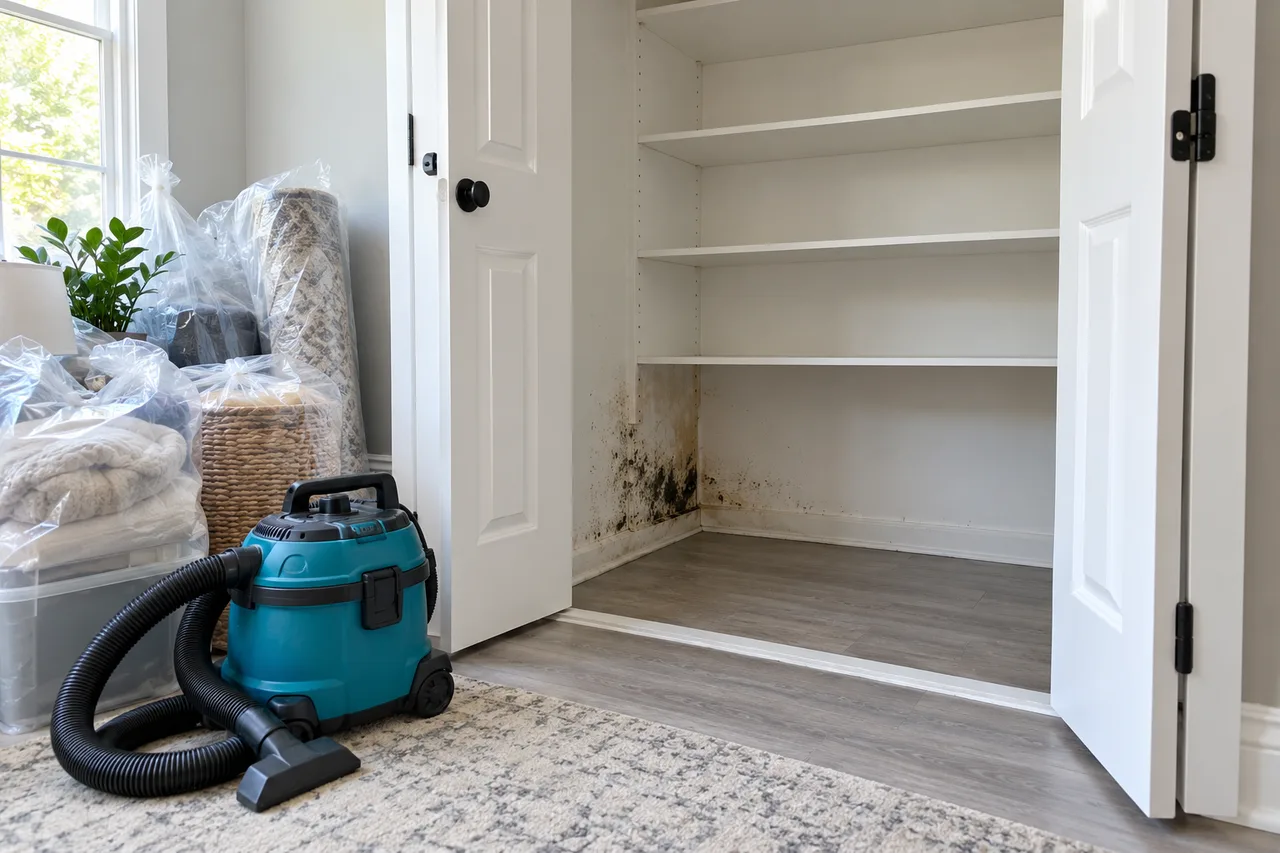
Closet mold removal focuses on affected closet surfaces and contents while investigating the moisture condition behind the problem. It may involve cleaning, material removal or specialist handling of belongings. A compact space can still contain concealed damage; an odor alone does not establish the cause or removal boundary.
Describe the closet and the affected materials
Tell the assessor whether the closet is freestanding or built into a wall and whether it borders a bathroom, exterior wall or another area with a known leak. Describe visible findings, odors and when they appeared. Explain whether the concern is on the room surface, shelf backing, stored belongings or several of those locations. These observations help frame the assessment without proving a particular source.
A small closet does not necessarily mean a simple surface-cleaning job. Fixed shelving, lining materials and stored contents can hide parts of the assembly. Ask what the contractor will examine and what remains inaccessible. Conversely, a musty odor should not automatically be treated as permission to demolish the entire closet. A removal scope should be tied to findings and a reasoned boundary.
Mention any recent plumbing, roof, window or other water-related repair affecting the area. Share the records rather than assuming the problem has been resolved because the adjacent room now looks dry. If there is no known leak, ask whether additional moisture investigation is recommended before cleanup. The objective is to understand why the space became affected, not simply to select a product that changes its smell.
Handle clothing and belongings with a plan
Do not sort or shake suspect belongings to prepare the room for a visit. Ask the contractor how contents should be assessed and moved, particularly if they would pass through unaffected living spaces. Distinguish items awaiting assessment from items already approved for disposal or specialist cleaning. A building-material contractor may not perform textile or leather restoration itself.
Use existing records or safe observations to make an inventory of clothing, shoes, bags, paper items and storage containers. Ask who decides which are retained, who provides specialist treatment and what evidence will be supplied for discarded items. Confirm any transport, storage and return charges. A closet cleanup price should not be assumed to include every garment or guarantee that stains and odors on belongings can be removed.
Discuss sentimental or valuable items before authorizing disposal. Ask whether a specialist opinion is appropriate and how uncertainty about salvage will be explained. Keep item handling separate from the wall or shelving removal agreement so you know which company is responsible for each deliverable. If an insurance inquiry is planned, obtain documentation requirements from the insurer directly; this site cannot promise coverage for belongings or authorize a claim.
Why shelf edges and cabinet backs need separate assessment
A closet is a small space, but its assembly may be complicated. Painted wallboard, solid shelving, manufactured-wood panels, trim and a fitted cabinet back can respond differently to moisture. A clean-looking door or shelf front does not describe the condition behind a fixed panel. Assessment should identify which components can be reached and whether removal of a fitting is necessary to investigate the actual concern.
Shelf holes, wall junctions and flooring edges can be obscured by belongings. Clearing access is useful, but potentially affected contents need a handling plan so they are not simply moved into another occupied room. An appropriate decision distinguishes a cleanable surface from deteriorated or affected porous material. Warping, swollen edges and separated panel layers are material-condition issues, not just cosmetic stains. A surface treatment cannot reverse that deterioration.
Removing built-ins creates another task: reinstatement. The cleanup boundary should distinguish wall treatment, removal of a fitted unit, disposal, repair behind the unit and replacement shelving. A handyman rebuilding storage and a remediation contractor may not provide the same scope. Retained surfaces and the moisture cause should be reviewed before the closet is enclosed again. New cabinet backs should not make an unresolved damp wall harder to observe.
Follow the moisture path before changing storage habits
Closet growth can be associated with a nearby leak, moisture entering through an adjoining assembly or condensation on a cool surface. Its location alone does not prove that clothing was packed too tightly or that a pipe has failed. Note whether the mark is next to a bathroom, exterior wall or known previous leak, and whether it returns after rainfall or fixture use. These are investigation clues, not a diagnosis from a room layout.
Source correction and storage changes do different jobs. Repairing a leak addresses incoming water. Room-condition assessment addresses whether moisture is accumulating on surfaces. Moving belongings to allow access may make observation and air circulation easier, but it does not repair an active leak or establish that a wall cavity is unaffected. Fragrance, repainting and a small moisture absorber should not be presented as substitutes for investigating recurring dampness.
Clothing and personal items also need decisions independent of the building repair. Keep potentially affected items separate until an appropriate cleaning or specialist recommendation is available. Valuable leather, textiles and other delicate items may need care methods different from those used on building surfaces. Refill the closet only after the agreed material and source work has been reviewed. An accessible arrangement makes it easier to notice a returning mark, but it is follow-up housekeeping rather than a guarantee against new growth.
Compare disruption, costs and completion checks
Request the affected area, proposed removal or cleaning, contents handling, disposal and final repair as identifiable tasks. Access through a bedroom, furniture movement and fitted shelving can affect even a compact job. Ask whether the surrounding room needs protection or temporary restrictions and how those arrangements will be communicated to occupants.
Clarify separate charges for contents specialists, removal of built-ins, material replacement, paint and return visits. If the initial visit is an assessment only, confirm that charge and whether it is separate from later cleanup. Use written approval for additions and verify required contractor license and insurance before hiring. The closet's small size should not prevent a clear scope or become a reason to accept undefined work terms.
Ask how completion will be evaluated before agreeing to the job. If sampling is proposed, request the defined question it answers; visible growth usually does not require sampling under EPA guidance. A sample result, perfume-like odor or newly painted surface should not replace an explanation of which materials were handled and whether the source task is complete. The contractor should provide an understandable account of its own work and its limitations.
Reinstate storage with a documented handover
Before belongings return, ask the contractor to confirm the status of retained surfaces, replacements and any restrictions. Separate completion of building cleanup from the return of items treated by another specialist. Check that shelving, doors, fixtures and paint included in the agreement have been reinstated, and record outstanding tasks with the responsible company.
Keep the material decisions, contents inventory and source-repair records together. If a specialist treated clothing or other items, retain its instructions and actual warranty terms. Do not assume a building contractor's agreement covers the performance of a separate contents service. Ask whom to contact if an item or surface develops the original concern again after being returned.
If visible growth or dampness reappears, record the location and timing and arrange a source reassessment rather than repeatedly cleaning the same patch. New findings may involve an adjoining wall or another room, and a broader remediation scope may be appropriate. An inspection can help when the affected boundary is unclear. Closet mold removal is a focused service for a defined space and its contents, not a promise that every moisture issue in the property has been evaluated.
Separate the closet materials before choosing a scope
| Situation or stage | What it addresses | Important limit |
|---|---|---|
| Accessible hard shelving | A surface and material-condition assessment. | Cleaning a shelf front does not assess its concealed backing. |
| Swollen manufactured-wood panel | Evaluate deterioration and replacement rather than appearance alone. | A surface treatment cannot restore a separated panel. |
| Clothing or valuable textiles | A contents-specific cleaning or specialist decision. | Building cleanup methods may be unsuitable for delicate items. |
| A damp mark behind a fixed unit | Plan access and investigate the adjoining wall and moisture path. | Rebuilding storage first can conceal the unresolved area. |
Typical work sequence
- Record the closet layout and visible concern without disturbing affected material.
- Plan contents handling and access behind any fixed shelving.
- Address the moisture source and the assessed building materials separately.
- Review the cleaned or repaired area before reinstating storage and returning belongings.
The actual sequence depends on the assessed property and the hired contractor's written scope. These are planning stages, not an appointment or completion-time promise.
When to Discuss Closet Mold Removal
Closets can hide mold behind stored items, along exterior walls or near plumbing. Cleanup should begin with access, containment decisions and the moisture source.
Signs Your Property May Need Attention
- Musty smell when the closet opens
- Spots on walls, trim, shoes or boxes
- Condensation or staining on an exterior closet wall
What the Service May Include
- Remove contents safely for assessment
- Clean or remove affected surfaces and materials
- Discuss airflow, leak repair or humidity control
Benefits of Closet Mold Removal
- A closet-specific scope identifies the shelves, finishes and belongings that need assessment.
- A contents handling plan clarifies who will move, document and return items during the cleanup.
- Discussing the adjoining room, exterior wall and plumbing helps connect the closet concern to possible follow-up work.
Limitations and Risks
- Cleaning the visible closet surface may leave an underlying leak or concealed area unresolved.
- Clothing, footwear and sentimental belongings may require a specialist; not every item can be restored.
- Built-in shelving and stored contents may limit access or add removal and reinstatement costs.
Questions Before Hiring a Contractor
- Which belongings were affected?
- Is the closet on an exterior wall or near plumbing?
- What should be discarded, cleaned or documented?
Costs and Work Terms
Pricing depends on the assessed property, affected materials, urgency, access and the contractor's written scope. Confirm any assessment charge, exclusions, payment terms, license and insurance before approving work.
Frequently Asked Questions
Does closet mold removal include cleaning clothing and shoes?
Not necessarily. Ask whether contents are included, whether a specialist is recommended and how items will be handled separately from walls or shelving.
Can painting closet walls solve the problem?
Paint is not a substitute for addressing mold and moisture. EPA advises against painting moldy surfaces. Discuss cleanup, drying and the underlying condition before applying a finish.
What should I share when calling about closet mold?
Describe the odor or visible area, nearby plumbing, any leak history and which belongings are affected. Ask what access is needed before moving or disturbing stored items.
Homeowner Resources
General AI-assisted homeowner guidance published by ClearHaven Restoration, a contractor-connection website, not a restoration contractor. References support the safety, sampling and equipment explanations; they do not certify this website or a contractor. This guide is not a property assessment. How this information is prepared.