At a glance
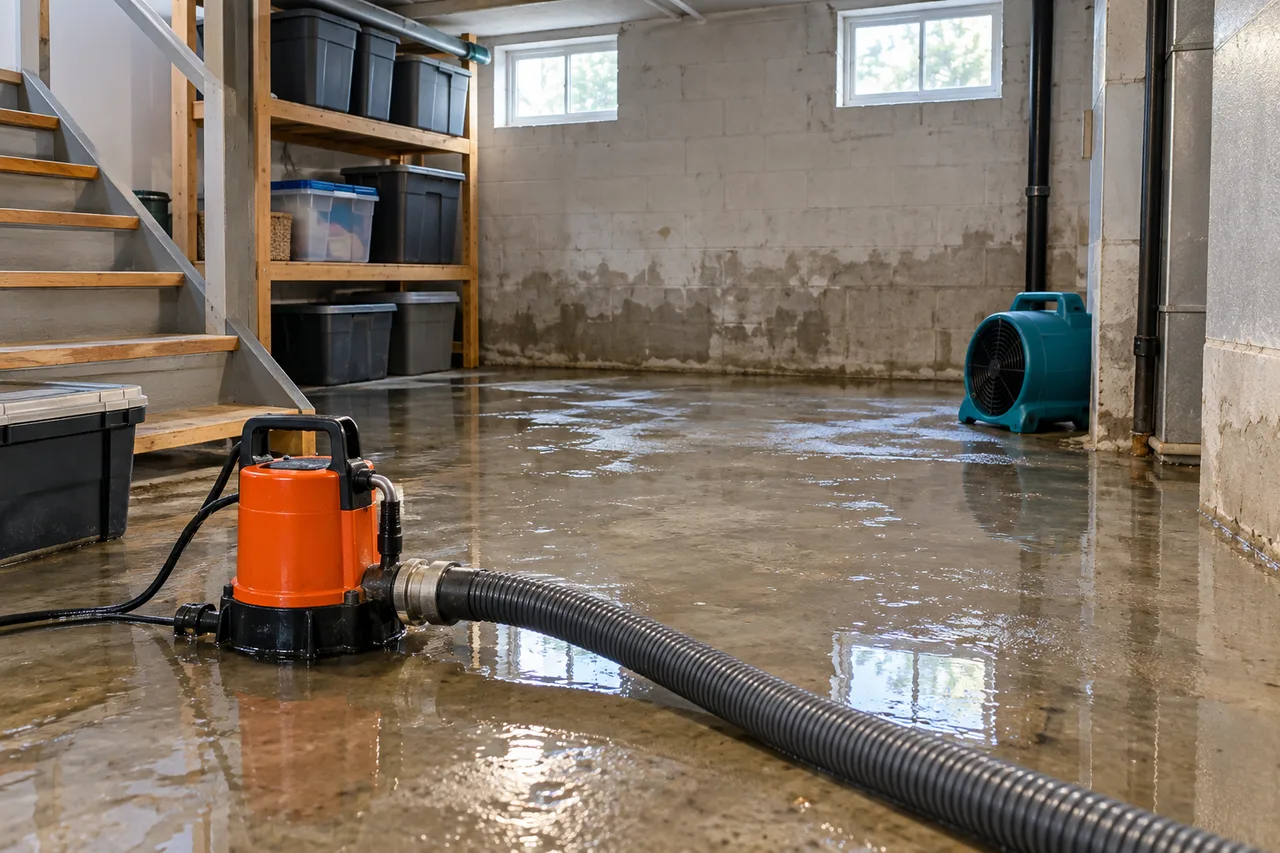
Flooded basement cleanup addresses standing water, affected materials and contents after entry hazards and the water source have been assessed. Pumping is only one stage. Basement structure, electrical equipment, water contamination, drying and source correction can require different professionals and a carefully coordinated work plan.
Get an access assessment before entering
Do not enter a flooded basement to check appliances, retrieve belongings or start pumping. Water around electrical systems and concerns about the building can make entry unsafe. CDC guidance emphasizes electrical and reentry hazards after flooding. Contact the appropriate emergency service for immediate danger and describe the situation from a safe location when arranging professional assistance.
Tell the responding company whether water appears to be rising, what source is suspected and whether a utility or other professional has already attended. Outside flooding, a supply leak and a wastewater event can call for different assessments. Water appearance does not establish its condition. Do not select a cleanup method or assume the basement can be entered solely because the water looks shallow or clear.
Ask who will assess access, electrical concerns and any structural questions before removal begins. Basement pumping decisions can require attention to conditions around the building as well as water inside it; this guide does not prescribe a pumping rate or sequence. The hired professional should explain the appropriate property-specific approach and whether another specialist is needed. A call to ClearHaven is not a guarantee of an emergency crew or a safe-entry determination.
How the water source changes the cleanup plan
A failed appliance, a supply-line leak, wastewater returning through a drain and outside floodwater are different exposures. The same water depth can therefore lead to different cleanup and material decisions. Do not use clarity or lack of odor to decide that a basement flood is sanitary. Continuing entry, utilities and structural concerns also affect whether the area can be approached. The first decision is an appropriate access and source assessment, not immediate pumping by the homeowner.
Correction belongs with the relevant trade or public authority. Clearing a drain does not repair a foundation entry path; extracting water does not replace a failed appliance connection. If outside water remains against the building, changes in water level can raise structural questions that need professional assessment. This guide does not provide a universal basement pump-out rate. Follow local emergency instructions and the professionals assessing the building rather than using a generic timer.
Once the source and exposure are understood, the cleanup boundary follows the affected layers and contents. Water can be under a floor finish, behind a finished wall or inside stored items even when the open floor looks clear. The report should identify those assemblies and the areas that could not be assessed. That information connects early removal to the later drying, material-retention and repair decisions instead of treating a cleared basement floor as the end of the job.
Inventory the basement without risking entry
Use existing photographs and records to list major contents, finishes and equipment while the basement remains inaccessible. Describe whether it is finished living space, a utility area or storage, and identify fixed cabinets or floor coverings. The contractor needs to assess the actual materials and exposure before recommending retention, removal or specialist handling.
Ask for a room or zone plan that distinguishes affected building materials from personal belongings. Stored boxes, furnishings, wall assemblies and utility equipment may require different specialists or decisions. Do not assume that a functioning appliance is suitable for use after flood exposure; have the appropriate professional assess affected equipment. The cleanup team should be clear about tasks it does not perform.
Before removal of belongings, agree on documentation, approvals and disposal. For items considered for salvage, request the handling plan, location of any outside treatment and relevant charges. A flooded basement cleanup price does not necessarily include replacing contents or repairing mechanical equipment. Keep the inventory useful for your own record and any insurer discussion, without assuming that documentation establishes insurance coverage or obliges an insurer to pay.
What happens between extraction and rebuilding a basement
Open-water removal is followed by decisions about finishes, hidden layers and stored possessions. A basement may have a bare slab in one area and finished flooring in another; those areas should not be given the same material scope automatically. Insulation, wallboard and floor coverings need assessment for exposure, deterioration and access. Appliances, electrical equipment and mechanical systems require their own qualified checks rather than being treated as ordinary furniture.
Drying equipment addresses assessed retained materials and room conditions. It does not make contamination disappear or reverse a damaged finish. The plan should explain the monitored locations and the criteria for changing the next stage. A dry-looking slab does not establish that a framed wall beside it is ready to close. Where the material or exposure calls for removal, repeatedly adding fans is not an alternative to that decision.
Reconstruction should follow the review of retained layers and continuing source responsibilities. A new wall can hide an unresolved seepage issue, and new flooring can make a damp subfloor difficult to assess later. Keep source repair, cleanup, drying and finish replacement as distinct deliverables even when one contractor coordinates them. Contents transport and disposal are additional decisions. The completion record should make clear which equipment, rooms and belongings remain restricted and which professionals are responsible for outstanding work.
Compare complete scopes and occupancy disruption
Discuss whether the basement or other rooms must remain restricted and how workers will reach the affected area. Stairs, narrow doors, shared entrances and stored contents can change the labor and equipment arrangements. Ask how travel routes are protected and who moves furniture. Confirm how schedule changes and access instructions will be communicated to occupants.
Compare proposals by included tasks: attendance, water removal, protection, contents handling, removal, disposal, cleaning, drying checks and reconstruction. Ask about after-hours charges, equipment billing, return visits and source repairs handled separately. Rebuilding a finished basement can involve multiple trades; the cleanup price should not be assumed to include new flooring, walls, cabinetry or utility repairs unless the scope states so.
Clarify payment milestones, written change approvals and the contractor's actual warranty terms. Verify required license and insurance before hiring. If an insurer is involved, obtain its policy and reporting requirements directly and clarify payment responsibility while a claim is pending. This site cannot promise coverage, a final price or a response time. The most useful comparison is one that makes the proposed outcome, exclusions and accountability understandable.
Complete the handover before rebuilding
Request records identifying the treated areas, removed materials, retained contents and outstanding source tasks. Ask how material condition and cleanup completion were evaluated and what limitations remain. Share relevant records with the rebuilding contractor, particularly where several companies handled extraction, cleanup and drying. A handover should explain the starting condition for reconstruction, not merely report that equipment was collected.
Check final debris removal, contents storage and any fixtures or access components disturbed during the work. Identify repairs outside the agreement and arrange the responsible trade separately. Keep actual product, workmanship and specialist warranty terms with their corresponding contracts. Do not interpret a cleanup warranty as protection against another flood or a future utility failure.
Discuss follow-up source investigation if the cause was uncertain or incidents have occurred before. Record any new water event with its timing and location so a later assessment can distinguish recurrence from a different problem. Basement mold removal may be a focused follow-up when growth is identified, while wider damage may need a restoration plan across several rooms. The aim is an orderly return to the agreed condition with unresolved concerns visible, not hidden by new finishes.
Basement cleanup decisions by exposure and assembly
| Situation or stage | What it addresses | Important limit |
|---|---|---|
| Water from a known indoor supply failure | Assess the history, affected layers and appropriate salvage options. | A known origin does not remove electrical or structural concerns. |
| Drain backup or outside floodwater | Use a contamination-aware professional cleanup scope. | Appearance alone cannot establish that the water is clean. |
| Finished walls or layered flooring | Assess concealed material and access before selecting drying methods. | A cleared floor is not proof that every assembly is ready to rebuild. |
| Affected utilities or appliances | Obtain checks from the appropriate qualified professionals. | Surface cleanup does not establish safe operation. |
Typical work sequence
- Follow emergency access restrictions and have the source and utilities assessed.
- Plan water removal for the actual building conditions and exposure.
- Evaluate finishes and contents, then clean, remove or dry according to the assessed scope.
- Review retained assemblies and outstanding source work before rebuilding or reusing equipment.
The actual sequence depends on the assessed property and the hired contractor's written scope. These are planning stages, not an appointment or completion-time promise.
When to Discuss Flooded Basement Cleanup
A flooded basement may involve stormwater, plumbing water or groundwater. The cleanup plan depends on the water source, depth, duration and materials exposed.
Signs Your Property May Need Attention
- Water across basement flooring
- Wet drywall, trim or stored items
- Silt, debris or odor after water recedes
What the Service May Include
- Extract water and remove affected debris
- Assess flooring, drywall, insulation and contents
- Dry the structure and discuss follow-up prevention needs
Benefits of Flooded Basement Cleanup
- A basement cleanup plan organizes water removal, contents assessment and the next stage of work.
- Recording the water depth, affected materials and exposed contents helps define the proposed scope.
- Discussing drainage, plumbing or pump issues clarifies which source repairs need coordination.
Limitations and Risks
- Floodwater may contain contamination, and electrical hazards must be assessed before entering the space.
- Cleanup does not automatically include foundation repair, drainage changes or replacement of all belongings.
- The amount of debris, access to the basement and concealed damage can affect removal needs and charges.
Questions Before Hiring a Contractor
- What was the source of the water?
- How deep and how long was the basement wet?
- Which contents or building materials were exposed?
Costs and Work Terms
Pricing depends on the assessed property, affected materials, urgency, access and the contractor's written scope. Confirm any assessment charge, exclusions, payment terms, license and insurance before approving work.
Frequently Asked Questions
Is a flooded basement safe to enter?
Do not assume so. CDC guidance highlights electrical and contamination hazards after flooding. Arrange appropriate assessment before entering an affected basement or using electrical equipment there.
Will cleanup fix the reason the basement flooded?
Only if the scope includes the source repair. Sump-pump service, drainage work, plumbing repair or foundation work may require a different contractor.
What information helps a basement cleanup contractor?
Share the likely water source, approximate depth, duration, accessible entrance and affected contents. Describe any electrical concerns from a safe location and confirm availability before arranging attendance.
Homeowner Resources
- CDC: Reentering Your Flooded Home
- EPA: Water Damage Cleanup and Mold Prevention
- CDC: Floodwater Safety
General AI-assisted homeowner guidance published by ClearHaven Restoration, a contractor-connection website, not a restoration contractor. References support the safety, sampling and equipment explanations; they do not certify this website or a contractor. This guide is not a property assessment. How this information is prepared.