At a glance
A mold inspection assesses observable conditions, moisture concerns and relevant areas within an agreed access scope. It can help define whether cleanup or further investigation should be discussed. It is not the same as laboratory sampling, remediation or a guarantee that every hidden problem will be found.
Describe the concern and the inspection boundary
Tell the assessor why you are requesting a visit. Visible growth, an unexplained odor, a recent leak and a question about a previous repair are different starting points. Describe the location, when the concern appeared and any changes since then. These observations help set an inspection objective without forcing a conclusion before the property is examined.
Ask whether the visit covers one affected room, connected areas or a wider property review. The written agreement should name the areas and the intended questions. A whole-property label can still exclude roof spaces, wall cavities, locked rooms or common systems, so ask what access is actually included. If you need a report for another person or organization, clarify that recipient's requirements before booking.
Distinguish an inspection for information from a contractor visit intended to price cleanup. Both may involve observations, but they may deliver different levels of reporting and independence. Ask who is providing the assessment and whether recommendations are tied to services it also sells. The purpose is to understand the assignment and responsibility, not to assume a particular company is qualified because it uses an impressive service name.
Prepare useful property information
Collect earlier leak records, repair descriptions and relevant photographs that you already have. Note recurring condensation, areas kept closed and spaces that could not previously be inspected. Do not disturb suspect material to make it easier to see. If access is unsafe or damage is unstable, tell the assessor so an appropriate access decision can be made before arrival.
Identify which doors, rooms and spaces the assessor can enter and who can authorize additional access. In a rental or shared building, you may need permission for roof spaces, common areas or destructive investigation. Ask whether the visit is visual and non-destructive or includes agreed openings. An inspector should explain any proposed change in access and its consequences for reinstatement and cost.
Follow the provider's specific preparation instructions and ask for clarification where they are unclear. Do not hide the concern with painting or a treatment immediately before the visit. The assessor needs a useful description of current conditions, not a room arranged to produce a preferred finding. Keep an incident timeline so observations can be compared with the earlier water event, repair and any subsequent recurrence.
How an inspection connects symptoms to accessible evidence
An inspection begins with the reported concern: recurring staining, an odor, a previous leak or visible growth. The inspector relates those observations to accessible building conditions rather than treating every room as equally suspect. A history of when a mark returns can help distinguish a rain-related problem from one noticed after fixture use, but timing alone does not prove the source. The findings should show how an observation supports the proposed next step.
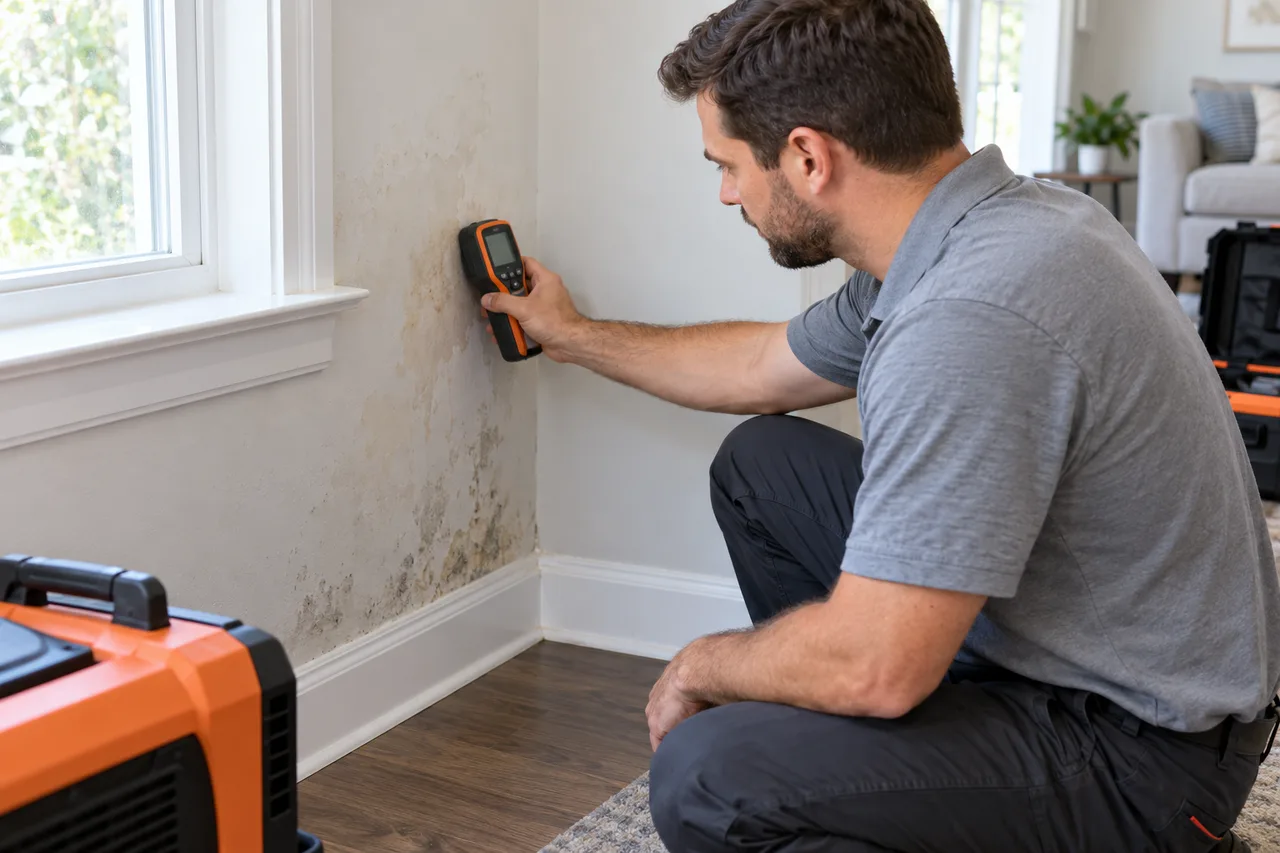
Moisture meters and thermal imaging are aids, not stand-alone mold diagnoses. A meter result needs interpretation for the surface and instrument. A thermal image shows temperature differences that may justify closer investigation; it does not directly identify mold. Inspecting accessible surfaces also differs from opening a concealed cavity. Invasive access requires an agreed boundary and consideration of materials, utilities and necessary repairs. Those limits should remain visible in the report.
The deliverable is a record of what was inspected, what was found, what could not be reached and which questions remain. Photographs should be tied to locations rather than supplied as an unexplained collection. A recommendation for sampling needs its own reason, since a physical inspection does not automatically require laboratory work. A recommendation for removal likewise needs a defined material and area. Clear boundaries make the report useful to the next professional without exaggerating what the inspection established.
Inspection, testing and remediation answer different needs
Choose inspection when the main uncertainty is where a moisture or growth concern comes from, which accessible areas are affected or what additional investigation is needed. Inspection can organize the problem even if no samples are collected. Choose testing when there is a specific question that appropriately designed samples can answer. Choose remediation when the affected materials and cleanup need have been defined. Buying one service does not automatically include the others.
A visible patch does not necessarily require a laboratory result before moisture correction and an appropriate cleanup plan. Conversely, unexplained staining should not automatically be sold as a whole-house removal project. The useful distinction is whether the decision concerns accessible building conditions, evidence from a sample or the physical work on an identified area. Each service has different methods, costs and reporting. The homepage's use of the word mold is not a property diagnosis.
An inspection can leave uncertainty where access is restricted or the source cannot be established during the visit. That is a reporting boundary, not a reason to hide the limitation. Further access, a different trade or targeted sampling may be appropriate, depending on the question. The report should name the unresolved issue so a follow-up is purposeful. Neither inspection nor testing determines the medical cause of symptoms; individual health concerns require appropriate professional advice.
Compare fees, qualifications and deliverables
Ask who conducts the inspection, who signs the report and what relevant experience supports the assignment. Verify any credential or license claim with the appropriate issuing body rather than relying on a badge alone. Requirements can depend on location and work type, so the homeowner should confirm the applicable requirements for the provider being hired.
Compare the scope and written deliverables before comparing the visit price. An oral walkthrough, a photo report and an investigation with additional access are not identical services. Ask about travel, return visits, report delivery, interpretation and any testing charged separately. Confirm whether a follow-up discussion is included and how the provider handles questions about unclear findings.
Keep a defined approval process for extra work. If the assessor discovers a concern outside the agreed area, ask what further visit, opening or specialist assessment is proposed and what it will cost. The original appointment should not automatically authorize every later investigation. Also ask about relationships with cleanup companies receiving referrals. Understanding who is responsible for each deliverable makes a report more usable and reduces confusion when comparing competing recommendations.
Use the report to organize action
When the report arrives, ask the assessor to connect each recommendation with a finding and an intended result. Separate immediate access concerns, moisture-source investigation, material cleanup and cosmetic repair. This order helps you arrange the right trade for each task instead of treating the entire report as a single instruction to buy a generic restoration package.
Share relevant findings with the contractor performing source repairs or remediation. Ask what additional assessment it needs and how new information will be recorded. Keep the original report unchanged alongside later findings so you can see which decisions were based on which observations. If different professionals disagree, request their reasons and boundaries rather than accepting whichever conclusion sounds more confident.
An inspection records an assignment at a particular time. A later leak, changed access or new visible concern may justify further review even when an earlier report was reassuring. Ask the provider how follow-up should be arranged and what is included in its original fee. ClearHaven offers information for discussing an independent assessment, not its own inspection findings or a promise that a listing page proves the condition of a specific property.
Select the investigation before commissioning work
| Situation or stage | What it addresses | Important limit |
|---|---|---|
| Unexplained odor | Accessible inspection and moisture-source investigation. | Odor alone cannot define the removal boundary. |
| Suspected hidden dampness | Assessment of accessible indicators and an agreed access plan. | A thermal picture alone is not a mold diagnosis. |
| A sampling-dependent question | A separate test design and interpretation assignment. | Not every inspection benefits from routine samples. |
| Defined growth needing physical cleanup | A material-specific remediation proposal. | The inspection fee does not usually represent cleanup work. |
Typical work sequence
- Provide the leak history and the exact concern rather than a presumed diagnosis.
- Agree on accessible areas, reporting and any proposed invasive investigation.
- Have observations recorded with locations and explicit access limitations.
- Use the findings to select source repair, targeted testing or a defined cleanup scope.
The actual sequence depends on the assessed property and the hired contractor's written scope. These are planning stages, not an appointment or completion-time promise.
When to Discuss Mold Inspection
A mold inspection is a condition assessment, not a promise that every hidden issue will be found. It can help identify likely moisture sources, affected materials and whether testing or remediation should be discussed.
Signs Your Property May Need Attention
- Visible staining or growth
- Musty odor near closets, walls or HVAC areas
- Past leaks with uncertain drying
What the Service May Include
- Inspect accessible affected areas
- Use moisture readings where appropriate
- Explain limitations and recommended next steps
Benefits of Mold Inspection
- An inspection organizes observations about staining, odor, leak history and accessible materials into a clearer property assessment.
- Documented findings can help the homeowner compare the recommended next steps with a proposed cleanup scope.
- Discussing access limitations early helps identify whether a further investigation is needed.
Limitations and Risks
- An inspection of accessible spaces does not rule out growth behind walls, cabinets or other concealed areas.
- Opening finishes, laboratory sampling and remediation may each require separate approval and charges.
- An inspection is a property-condition assessment, not a medical evaluation or a guarantee about every room.
Questions Before Hiring a Contractor
- Which areas are accessible for inspection?
- Is sampling included or separate?
- What hidden areas may need further evaluation?
Costs and Work Terms
Pricing depends on the assessed property, affected materials, urgency, access and the contractor's written scope. Confirm any assessment charge, exclusions, payment terms, license and insurance before approving work.
Frequently Asked Questions
Is mold inspection different from mold testing?
Yes. Inspection assesses property conditions and accessible areas; testing involves samples. Confirm whether the inspection fee includes sampling or whether it is proposed separately.
Can an inspector see behind walls without opening them?
Not completely. Instruments may help guide an investigation, but inaccessible cavities remain a limitation. Ask which areas were examined and whether opening materials is recommended.
How should I prepare for a mold inspection?
Share the leak history, affected rooms and any prior cleanup reports. Arrange access to the relevant spaces, but avoid disturbing suspected growth before the assessor explains the next steps.
Homeowner Resources
- EPA: Mold, Moisture and Your Home
- EPA: Mold Testing or Sampling
- EPA: Finding Mold and Moisture
- FLIR manufacturer guidance: thermal imaging and moisture confirmation
General AI-assisted homeowner guidance published by ClearHaven Restoration, a contractor-connection website, not a restoration contractor. References support the safety, sampling and equipment explanations; they do not certify this website or a contractor. This guide is not a property assessment. How this information is prepared.